

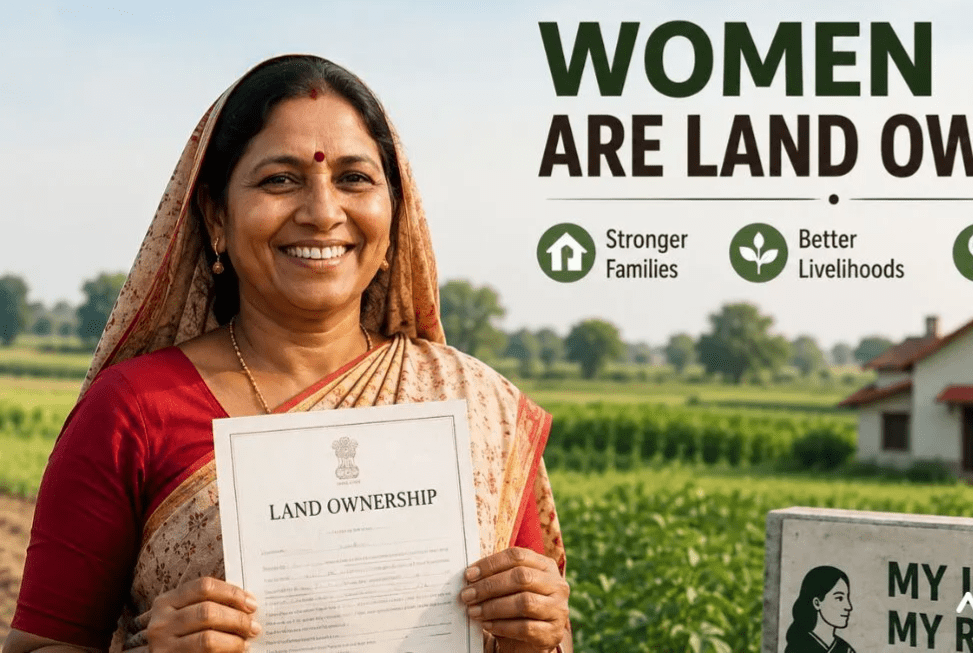
New Delhi: Women’s ownership of property has emerged as a key indicator of financial empowerment and gender equality in India. The latest findings from the National Family Health Survey (NFHS-6) 2023-24 reveal significant differences among states in the proportion of women who own a house or land, either individually or jointly.
Property ownership provides women with greater financial security, stronger decision-making power within households, and improved access to credit and economic opportunities. While India has made progress in increasing women’s asset ownership, the latest data shows that some states are performing far better than others.
States With The Highest Share of Female Property Owners
According to NFHS-6, several states in eastern and northeastern India have recorded a relatively high proportion of women owning a house or land. These states have benefited from a combination of inheritance practices, government welfare schemes, and growing awareness of women’s property rights.
The survey indicates that women in states such as Meghalaya, Tripura, Odisha, and Andhra Pradesh report higher levels of property ownership compared to the national average. In some regions, traditional social structures and state-led initiatives encouraging joint property registration have contributed to these figures.
States Lagging Behind
On the other hand, some states continue to report relatively lower levels of female property ownership. Factors such as patriarchal inheritance practices, limited awareness of legal rights, and lower economic participation among women have affected ownership rates.
Experts note that while women may live in households that own assets, legal ownership often remains concentrated in the names of male family members.
Why Female Property Ownership Matters
Research has consistently shown that women who own property are more likely to enjoy:
- Greater financial independence
- Improved bargaining power within the family
- Better access to institutional credit
- Increased economic security
- Enhanced social status and decision-making authority
Property ownership is also linked to better outcomes in education, healthcare, and overall family welfare.
Government Efforts Boosting Women’s Ownership
Several state governments have introduced measures to encourage women to register property in their names. These include:
- Reduced stamp duty rates for women buyers
- Joint ownership incentives in housing schemes
- Financial assistance for women-led households
- Awareness campaigns on inheritance and property rights
Central government housing initiatives have also encouraged the inclusion of women as co-owners in residential properties.
National Trend Shows Improvement
The NFHS-6 findings suggest that women’s ownership of houses and land has improved over the years, reflecting broader gains in financial inclusion and women’s empowerment. However, significant regional disparities remain, highlighting the need for continued policy support and legal awareness.
As India moves toward greater gender equality, ensuring that more women own productive assets such as land and housing will remain a crucial component of inclusive economic development.
Citizens interested in comparing their state’s performance can refer to the detailed NFHS-6 state-wise tables, which provide insights into women’s ownership of houses and land across the country.
NFHS-6 data reveals that only 18.8% of Indian households have a female member who owns a house or land. Meghalaya tops the list with 65.3%, while Jammu & Kashmir records the lowest female property ownership rate at 5%.NFHS-6 data reveals that only 18.8% of Indian households have a female member who owns a house or land. Meghalaya tops the list with 65.3%, while Jammu & Kashmir records the lowest female property ownership rate at 5%.