

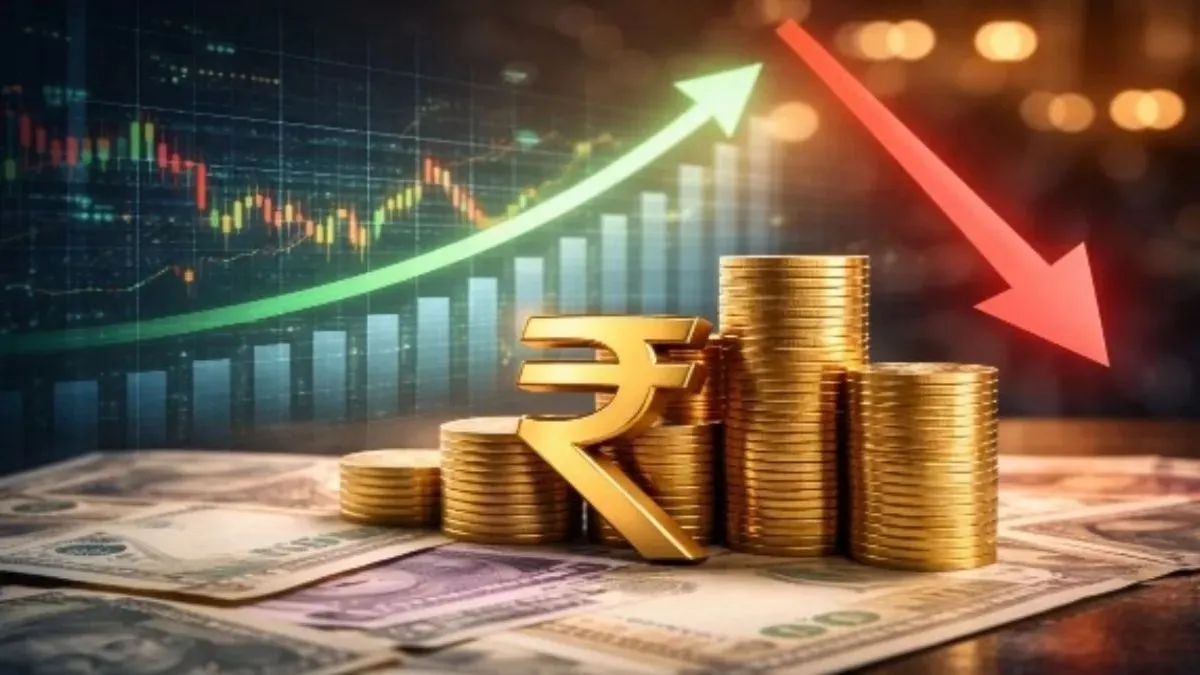
Mumbai: The Indian rupee weakened against the US dollar on Tuesday as the greenback surged to its highest level in nearly a year, driven by strong economic data from the United States and expectations of prolonged higher interest rates by the Federal Reserve. Despite the pressure on the currency market, Indian benchmark equity indices managed to post modest gains, supported by buying in banking, IT, and consumer-focused stocks.
The rupee opened lower and continued to face selling pressure throughout the trading session as investors preferred the safety of the dollar amid global economic uncertainties. Market participants noted that rising US Treasury yields and increased demand for the dollar from importers further weighed on the domestic currency.
Analysts said that the strengthening of the US dollar has become a key concern for emerging-market currencies, including the Indian rupee. A stronger dollar typically leads to capital outflows from developing economies as investors seek higher returns in US assets.
Meanwhile, India’s equity markets displayed resilience. The BSE Sensex and NSE Nifty closed in positive territory, supported by strong performances from select large-cap stocks. Banking and technology shares attracted fresh buying interest as investors remained optimistic about India’s economic growth prospects and corporate earnings outlook.
Market experts believe that domestic equities continue to benefit from strong retail participation, healthy macroeconomic indicators, and expectations of sustained economic expansion. However, they cautioned that currency volatility and global market developments could influence investor sentiment in the near term.
Foreign institutional investors remained active in the market, closely monitoring global interest-rate trends and geopolitical developments. Traders also kept an eye on crude oil prices, as higher energy costs can increase India’s import bill and put additional pressure on the rupee.
Looking ahead, investors are expected to focus on upcoming US economic data releases, Federal Reserve commentary, and domestic inflation indicators for further direction. Currency experts suggest that the rupee may remain under pressure if the dollar continues its upward trajectory, although intervention by the Reserve Bank of India could help limit excessive volatility.
Despite the rupee’s decline, the broader outlook for Indian financial markets remains cautiously optimistic, supported by robust domestic demand, government-led infrastructure spending, and improving corporate fundamentals. Market participants will continue to watch both global and domestic developments for cues on the next phase of market movement.
The Indian rupee declined by 17 paise to trade at 94.93 against the US dollar in opening trade on Wednesday, pressured by a strengthening greenback. The dollar climbed to a more-than-one-year high, driven by heightened expectations of a Federal Reserve interest rate hike and increased safe-haven demand. This followed Tuesday’s session, where the local currency had closed at 94.76 against the AmeriThe Indian rupee declined by 17 paise to trade at 94.93 against the US dollar in opening trade on Wednesday, pressured by a strengthening greenback. The dollar climbed to a more-than-one-year high, driven by heightened expectations of a Federal Reserve interest rate hike and increased safe-haven demand. This followed Tuesday’s session, where the local currency had closed at 94.76 against the Ameri