

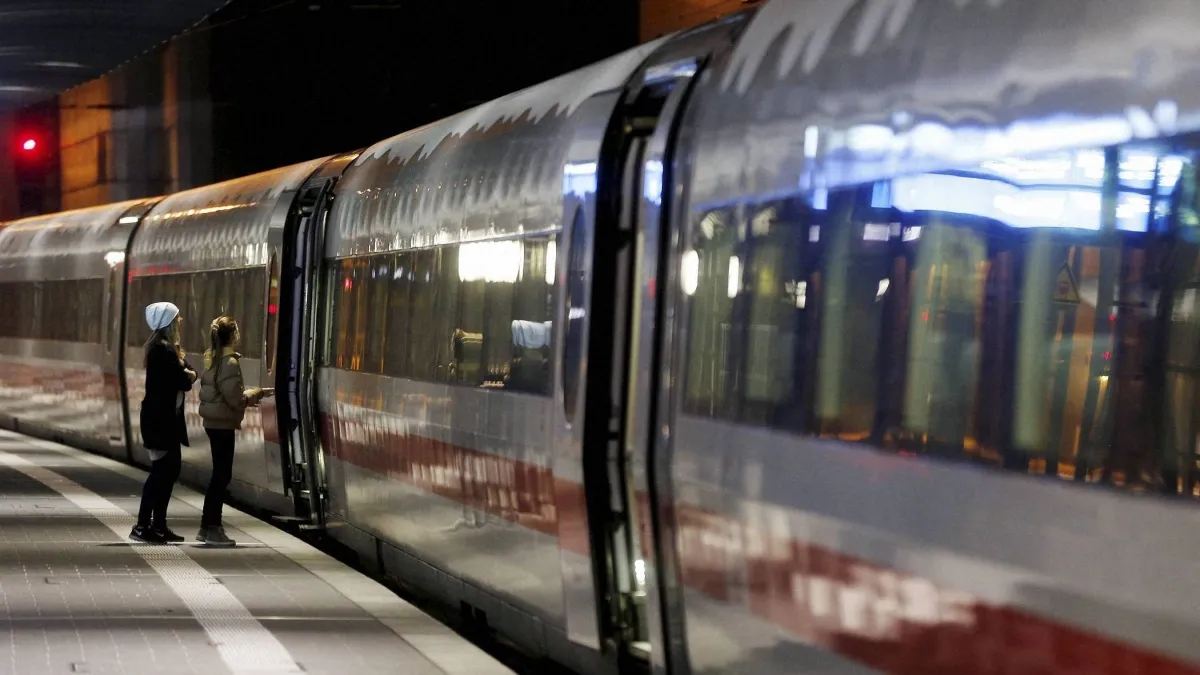
Berlin: Germany’s rail network came to a standstill after a major technical failure affected the country’s digital railway communication system, causing widespread disruption and stranding thousands of passengers across the nation.
According to Germany’s national railway operator, Deutsche Bahn, the disruption was triggered by an outage in the Global System for Mobile Communications–Railway (GSM-R), a critical digital radio network used for communication between train drivers and traffic control centers. As a safety measure, train services across the country were halted until the issue could be resolved.
What Is GSM-R and Why Is It Important?
GSM-R serves as the backbone of railway communications in Germany and many other European countries. It enables real-time communication between train operators, dispatchers, and signaling systems, helping ensure safe train movements across the network. When the system failed, trains could no longer reliably communicate with control centers, making it unsafe to continue operations.
Nationwide Impact
The outage led Deutsche Bahn to stop trains at stations nationwide, affecting long-distance, regional, and commuter services. Passengers faced significant delays, cancellations, and uncertainty as railway staff worked to restore services. The operator provided taxi and hotel vouchers to stranded travelers and arranged alternative transportation where possible.
Was It a Cyberattack or Sabotage?
As of now, Deutsche Bahn has not disclosed the exact technical cause of the outage. The company stated that the source of the problem had been identified and later fixed, allowing train services to gradually resume. However, officials have not publicly confirmed whether the disruption resulted from a software failure, hardware malfunction, or another technical issue.
Services Return to Normal
After several hours of disruption, Deutsche Bahn’s IT teams restored the GSM-R system, and train operations gradually resumed across Germany. The railway operator warned that delays and some service limitations could continue temporarily as the network returned to normal operations.
The incident is considered one of the most significant nationwide rail disruptions in recent years and has renewed discussions about the resilience and modernization of Germany’s railway infrastructure.
Germany Train Service: How did a communications fault paralyse rail services? The issue with the Global System for Mobile Communication for Railways (GSM-R) communication system brought the service to a standstill.Germany Train Service: How did a communications fault paralyse rail services? The issue with the Global System for Mobile Communication for Railways (GSM-R) communication system brought the service to a standstill.