


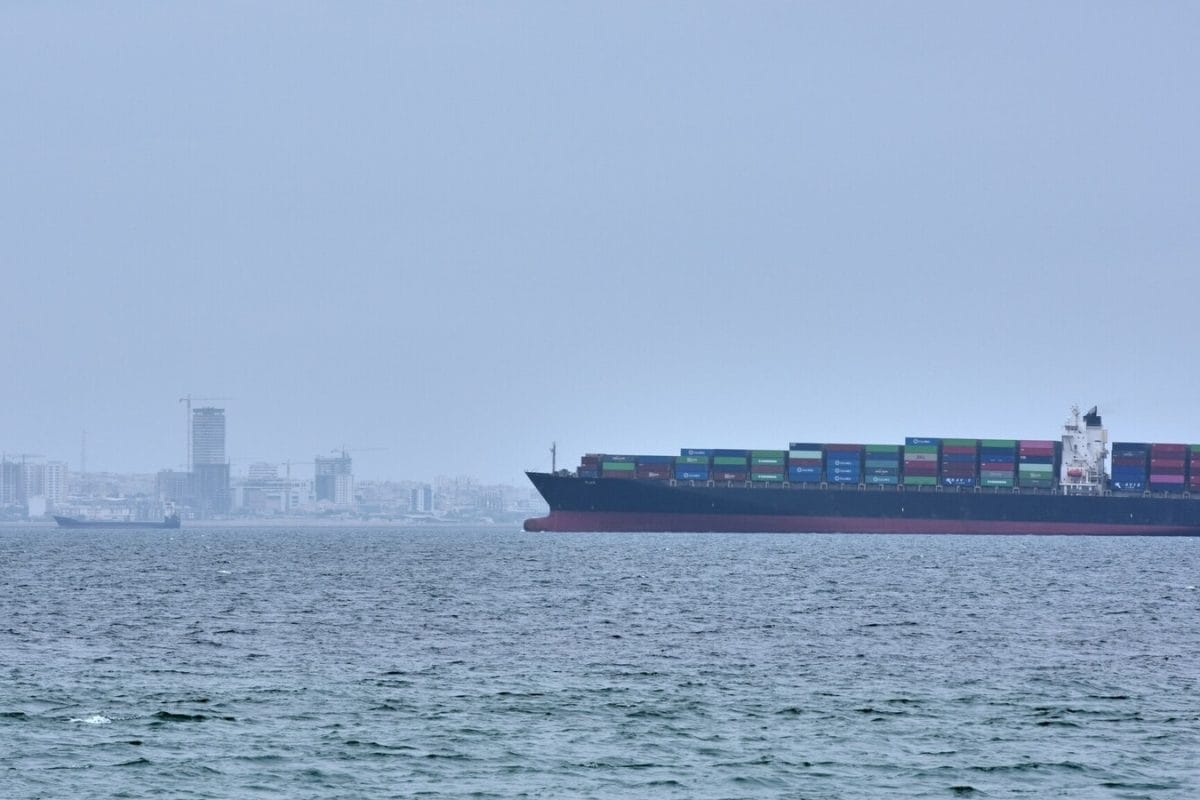
Amid rising geopolitical tensions in West Asia and concerns over maritime security, the Indian government has explained how Indian ships continue to safely navigate through the strategically vital Strait of Hormuz — one of the world’s busiest and most sensitive shipping routes.
The Strait of Hormuz serves as a crucial gateway for global oil and gas supplies, connecting the Persian Gulf with the Arabian Sea. A significant portion of India’s crude oil and LPG imports passes through this narrow maritime corridor, making uninterrupted access critical for the country’s energy security.
How Indian Ships Cross The Strait
According to government officials and maritime reports, Indian-flagged vessels and India-bound cargo ships are currently operating under enhanced security protocols and close coordination with multiple agencies, including the Indian Navy, Directorate General of Shipping (DGS), and international maritime authorities.
India has also launched maritime protection measures under what has been referred to as Operation Urja Suraksha, involving deployment of naval warships in the Gulf region to assist and monitor merchant vessels carrying vital cargo to India. Reports indicate that Indian naval assets have been guiding and escorting several India-bound ships in high-risk waters near Hormuz.
Officials stated that Indian vessels follow internationally recognized shipping lanes and traffic separation systems while maintaining constant communication with maritime coordination centers. Ships are required to undertake voyage-specific risk assessments before entering the high-risk area.
Is There Real-Time Tracking Of Indian Ships?
Yes. The government has confirmed that Indian authorities maintain continuous monitoring of vessel movements through real-time maritime tracking systems and reporting mechanisms.
As part of strengthened security measures, all vessels transiting the region are mandated to submit regular updates through digital ship reporting systems operated by the Directorate General of Shipping. The DGCOMM Centre reportedly maintains 24×7 monitoring of vessel movements with hourly updates and emergency coordination support.
However, in certain sensitive situations, some ships temporarily switch off public transponders or Automatic Identification System (AIS) signals while crossing vulnerable stretches of the route due to security concerns. Despite this, authorities continue to monitor vessel movement through secure maritime channels and intelligence coordination.
Recent reports also highlighted that multiple India-bound LPG and crude oil tankers have successfully crossed the Strait of Hormuz despite regional tensions and temporary disruptions.
Why The Strait Of Hormuz Matters To India
India is heavily dependent on energy imports from Gulf nations such as Saudi Arabia, Iraq, UAE, Qatar, and Kuwait. Any disruption in Hormuz directly impacts global oil prices, shipping insurance costs, and fuel supply chains.
Experts note that ensuring safe passage through the Strait remains a top strategic priority for India, particularly during periods of conflict or military escalation in the region.
The government has reiterated that it remains in close touch with regional stakeholders and continues to monitor the evolving maritime situation to safeguard Indian trade and energy interests.