

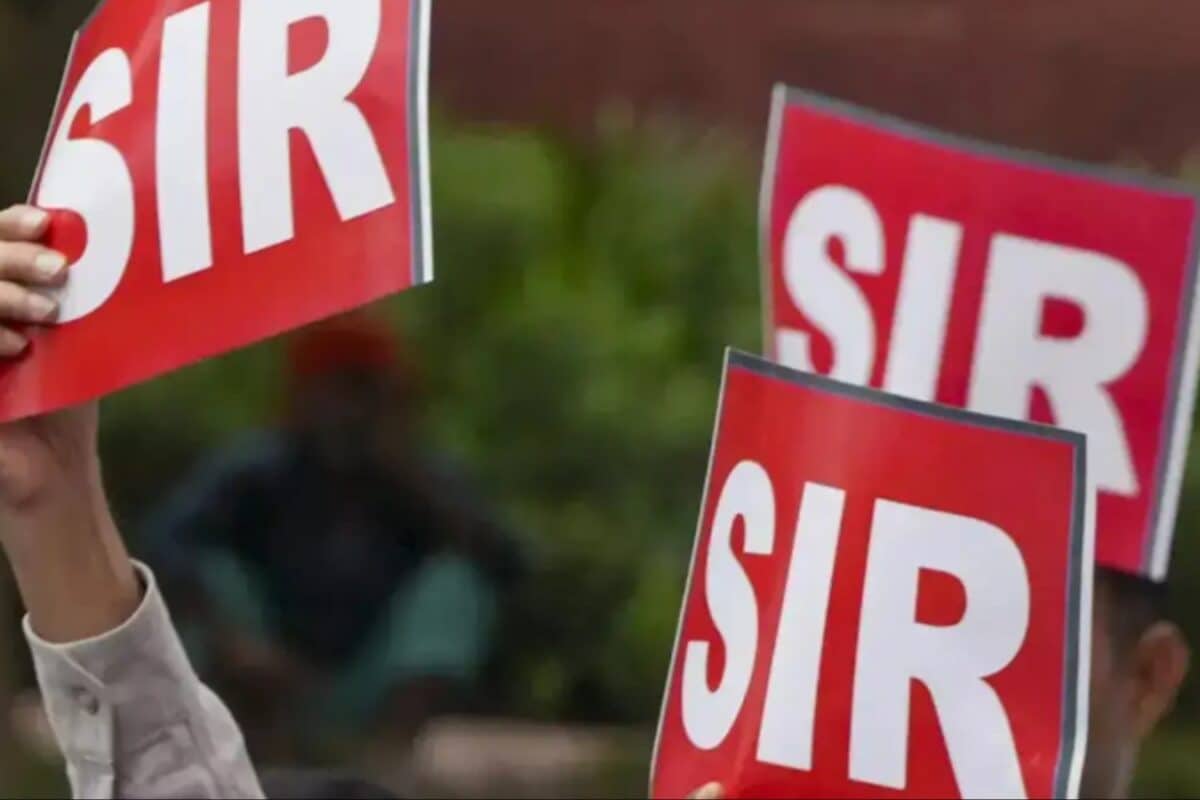
In a significant ruling with far-reaching implications for India’s electoral framework, the Supreme Court of India has upheld the constitutional validity of the Special Intensive Revision (SIR) exercise carried out under the Representation of the People (RP) Act, observing that the process “breathes new life” into the legislation aimed at ensuring clean and accurate electoral rolls.
The judgment is being seen as a major endorsement of the Election Commission’s authority to periodically verify and revise voter lists in order to maintain the integrity of the democratic process.
What Is The SIR Exercise?
The Special Intensive Revision (SIR) is a large-scale electoral roll verification exercise conducted by the Election Commission of India. The process involves door-to-door verification, updating voter records, removal of duplicate or ineligible entries, and inclusion of eligible voters who may have been left out.
The exercise is designed to strengthen the accuracy of electoral rolls, which form the foundation of India’s voting system.
Challenges to the SIR exercise had argued that intensive verification drives could potentially violate privacy rights, create administrative hardships, or lead to wrongful exclusion of voters.
Court’s Key Observations
While dismissing the challenge, the Supreme Court of India observed that the Representation of the People Act gives sufficient statutory backing to such revision exercises and that maintaining accurate voter rolls is essential to free and fair elections.
The bench reportedly remarked that:
- Electoral purity is central to democracy
- The Election Commission has constitutional responsibility to maintain accurate rolls
- Periodic revision mechanisms are necessary in a dynamic population environment
- The SIR exercise reinforces the objectives of the RP Act rather than undermining them
The court further stated that the exercise “breathes new life into the RP Act,” emphasizing that electoral laws must evolve with changing demographic realities and technological capabilities.
Why The Verdict Matters
The ruling carries major significance because electoral rolls remain one of the most sensitive components of India’s democratic machinery. Errors in voter databases can lead to:
- Duplicate voting concerns
- Inclusion of deceased voters
- Migration-related discrepancies
- Exclusion of legitimate voters
By validating the SIR framework, the court has effectively strengthened the legal foundation for future large-scale voter verification exercises.
Legal experts believe the judgment could also influence future debates surrounding digital voter databases, Aadhaar linkage discussions, and technology-driven electoral reforms.
Concerns Over Voter Exclusion
Despite supporting the constitutional validity of the exercise, observers note that concerns around implementation still remain important. Civil rights groups and opposition parties have repeatedly argued that intensive revision drives must ensure:
- Transparency
- Due process protections
- Clear appeals mechanisms
- Non-discriminatory implementation
Experts warn that wrongful deletion of names from electoral rolls can disproportionately affect vulnerable populations, including migrant workers, low-income communities, and elderly citizens.
The court is understood to have stressed that safeguards and procedural fairness must accompany any intensive revision exercise.
Strengthening India’s Electoral Framework
The ruling is likely to be viewed as a broader endorsement of institutional mechanisms aimed at improving election credibility in the world’s largest democracy.
The Election Commission of India has increasingly relied on technology, data integration, and verification campaigns to improve voter roll accuracy across states. The latest judgment may encourage further modernisation initiatives under the RP Act framework.
At a time when electoral transparency and voter integrity remain politically sensitive issues, the Supreme Court of India’s decision reinforces the constitutional importance of maintaining reliable electoral rolls while balancing citizens’ democratic rights.