

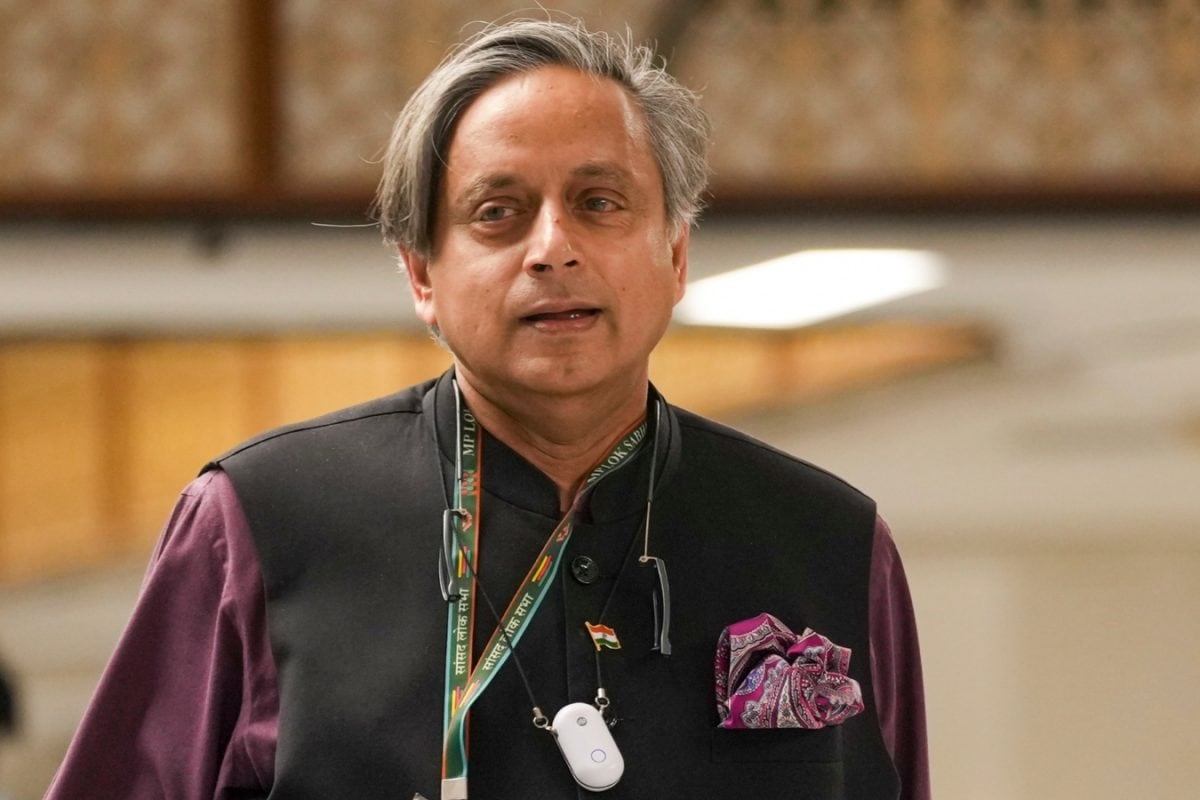
Senior Congress leader and Member of Parliament Shashi Tharoor has expressed support for the Centre’s decision to examine demographic changes in the country, stating that policymakers must clearly understand the scale and implications of population trends before framing long-term strategies.
Reacting to the Union government’s recent initiative to constitute a high-level committee on demographic transformation, Tharoor said the issue should not be viewed through a purely political lens but rather as a matter of national planning and governance.
“Any serious government must understand the numbers we are dealing with,” Tharoor remarked, emphasizing that demographic shifts affect everything from employment and urban infrastructure to education, healthcare, and social welfare policies.
Focus On Data, Not Politics
While demographic debates in India often become politically sensitive, Shashi Tharoor stressed the importance of relying on verified data and evidence-based policymaking. According to him, understanding changes in population distribution, migration patterns, fertility rates, and age demographics is essential for effective governance.
He noted that India’s population dynamics are rapidly evolving, with some states witnessing ageing populations while others continue to experience high youth growth. Such variations, he said, require targeted policy responses rather than broad political narratives.
Tharoor also pointed out that demographic realities directly impact parliamentary representation, economic planning, and resource allocation across states.
Centre’s High-Level Committee
The Centre recently announced the formation of a committee tasked with studying demographic change and its long-term implications for India. The move comes amid increasing discussions around population shifts, urban migration, regional imbalances, and socio-economic pressures.
Government officials have indicated that the committee will examine trends related to:
- Population growth patterns
- Fertility and ageing rates
- Migration and urbanisation
- Workforce participation
- Regional demographic disparities
The findings are expected to help shape future policies on infrastructure, education, labour markets, and social development.
Political Reactions Continue
Although the initiative has triggered varied political reactions, Shashi Tharoor’s remarks stand out because of his balanced approach toward the issue. Rather than dismissing the exercise outright, he called for informed debate grounded in statistical analysis and constitutional principles.
Political observers believe the conversation around demographic change could become increasingly significant in the coming years, especially as India navigates challenges linked to urban expansion, employment generation, and regional development disparities.
A Debate Beyond Population Numbers
Experts argue that demographic change is not solely about population size but also about economic productivity, healthcare burdens, social stability, and generational transitions. India currently has one of the world’s largest youth populations, but analysts warn that harnessing this demographic advantage will require major investments in education, skill development, and job creation.
At the same time, certain states are beginning to face ageing-related concerns similar to those seen in developed economies, creating a complex policy landscape for governments.
By supporting a fact-based examination of demographic trends, Shashi Tharoor has signaled that the issue deserves serious national attention beyond partisan politics.