


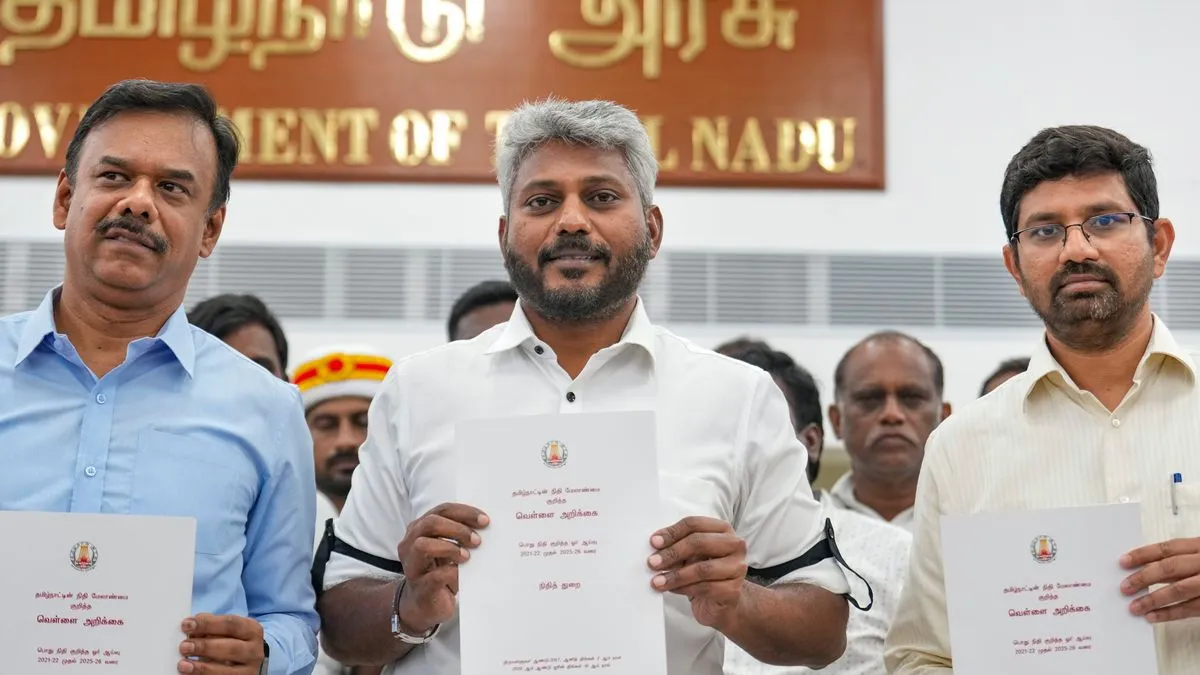
Tamil Nadu’s white paper reveals a massive fiscal crisis. With liabilities hitting 10 lakh crore by 2026, the report exposes structural revenue deficits and rising interest burdens, highlighting the severe debt facing the state economy.Tamil Nadu’s white paper reveals a massive fiscal crisis. With liabilities hitting 10 lakh crore by 2026, the report exposes structural revenue deficits and rising interest burdens, highlighting the severe debt facing the state economy.
The Tamil Nadu government has released a White Paper on the state’s finances, painting a concerning picture of rising debt, increasing interest payments, and mounting fiscal pressures. The report, released by Finance Minister N. Marie Wilson ahead of the state’s first budget under the new administration, estimates Tamil Nadu’s total debt exposure at ₹13.18 lakh crore when direct debt, public sector undertaking liabilities, and government guarantees are combined.
Debt Burden Crosses ₹13 Lakh Crore
According to the White Paper, Tamil Nadu’s direct outstanding debt has reached approximately ₹10 lakh crore in 2025-26, nearly double the ₹5.13 lakh crore recorded in 2021. When debts of state-owned enterprises and contingent liabilities are included, the overall debt burden rises to ₹13.18 lakh crore.
The report highlights that government guarantees have increased sharply from around ₹65,659 crore in 2021 to ₹1.79 lakh crore in 2026, adding to the state’s fiscal risks.
Record Revenue Deficit
One of the key concerns raised in the document is Tamil Nadu’s record revenue deficit of ₹78,324 crore in 2025-26. The White Paper describes the deficit as “structural,” indicating that recurring expenditure continues to exceed recurring revenue. Fiscal deficit has also climbed to ₹1.33 lakh crore, or 3.77% of the state’s Gross State Domestic Product (GSDP), above the 3% norm prescribed under fiscal responsibility guidelines.
Rising Interest Payments
The report warns that debt servicing is consuming a growing share of state finances. Interest payments are projected at ₹67,050 crore for 2025-26, exceeding the state’s capital expenditure of ₹50,911 crore. In practical terms, Tamil Nadu is spending ₹1.32 on servicing debt for every ₹1 invested in creating new assets and infrastructure.
Power Sector Emerges As Major Concern
The White Paper identifies the power sector as one of the biggest contributors to financial stress. The Tamil Nadu Electricity Board group reportedly carries debt of ₹2.47 lakh crore along with accumulated losses of ₹1.82 lakh crore.
Tax Revenue Performance Under Scrutiny
The report also points to weakening tax collections. Tamil Nadu’s own tax revenue-to-GSDP ratio has reportedly fallen to a record low of 5.45%, while overall revenue receipts have declined as a share of GSDP over the past few years. The document attributes part of the decline to inefficiencies and revenue leakages in tax administration.
Political Debate Intensifies
While the government says the White Paper is intended to provide transparency and chart a path toward fiscal recovery, opposition leaders have criticized the report, calling it politically motivated and disputing its conclusions. The release has sparked a fresh debate over the state’s financial management and the challenges facing Tamil Nadu’s economy.
Outlook
Despite highlighting serious fiscal challenges, the White Paper maintains that the situation is manageable through improved revenue mobilisation, expenditure discipline, and structural reforms. The government has stated that corrective measures can be implemented without imposing new taxes on the public.