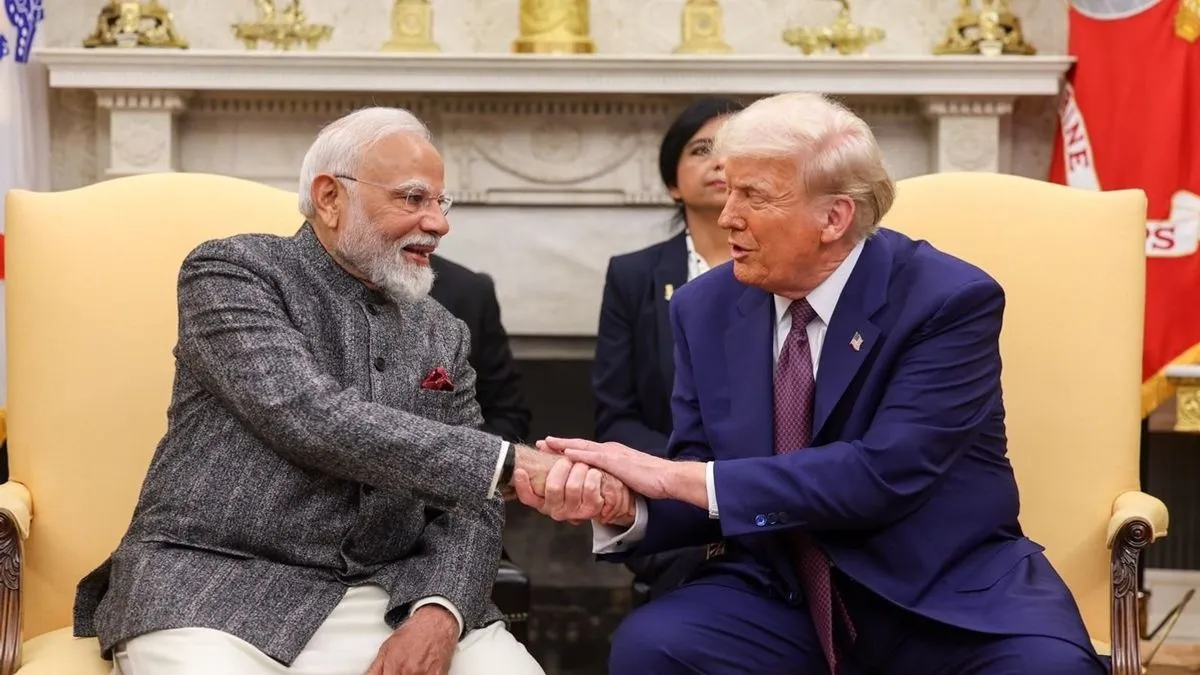


An overview of India Russia defence ties, highlighting trust-based collaboration, the Su-57 offer, BrahMos project, and India’s independent policy choices amid sanctions pressure.An overview of India Russia defence ties, highlighting trust-based collaboration, the Su-57 offer, BrahMos project, and India’s independent policy choices amid sanctions pressure.
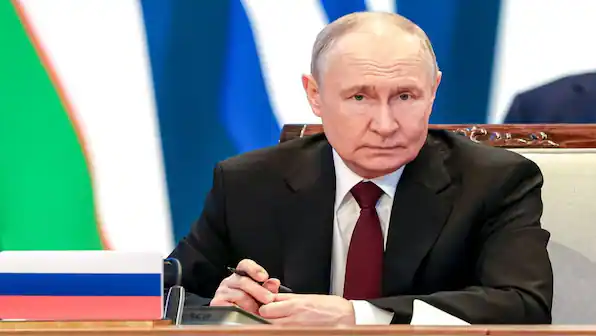
Russian President Vladimir Putin has praised Indian Prime Minister Narendra Modi while strongly criticizing Western sanctions policies, warning that any punitive action against India over its ties with Russia would ultimately “boomerang” on the United States.
Speaking during an economic and geopolitical discussion in Moscow, Putin highlighted India’s growing global influence and defended New Delhi’s independent foreign policy approach. He described India as a sovereign power capable of making decisions based on its national interests rather than external pressure.
Putin Defends India’s Russia Ties
Putin’s remarks come amid continuing international scrutiny over India’s purchase of discounted Russian crude oil and its broader economic engagement with Moscow following the Russia-Ukraine conflict.
The Russian leader praised India for maintaining what he called a “balanced and pragmatic” foreign policy. According to Putin, India has successfully protected its economic interests while preserving strategic partnerships with multiple global powers.
He also commended Prime Minister Modi’s leadership, saying India continues to emerge as one of the world’s most important economic and political centers.
Warning Against Sanctions
During the interaction, Putin sharply criticized the use of sanctions as a geopolitical tool. He argued that attempts to pressure India through economic restrictions or trade barriers would negatively affect American interests as well.
“Any sanctions against India would boomerang back on the United States itself,” Putin reportedly said, emphasizing the interconnected nature of the global economy.
He suggested that targeting a rapidly growing economy like India could disrupt international trade, energy markets, and strategic partnerships in the Indo-Pacific region.
India’s Position on Russian Oil
India has repeatedly defended its decision to continue importing Russian oil, arguing that energy security remains a top national priority. Indian officials have maintained that purchases are guided by market conditions and national economic interests.
Since the start of the Ukraine conflict, India has significantly increased imports of discounted Russian crude, helping reduce domestic fuel cost pressures while strengthening trade relations with Moscow.
Western countries, particularly the United States and European allies, have occasionally expressed concerns over these purchases. However, India has consistently maintained that its foreign policy decisions remain independent and non-aligned.
Strategic Partnership Between India and Russia
India and Russia have shared close diplomatic and defense ties for decades. Cooperation between the two countries spans:
- Defense and military technology
- Energy and oil trade
- Nuclear cooperation
- Space research
- Trade and investment
Despite changing global alliances and rising geopolitical tensions, both countries continue to maintain regular high-level diplomatic engagement.
Global Reactions
Putin’s comments have generated political reactions internationally, especially amid ongoing debates over sanctions effectiveness and the shifting global power balance.
Supporters of India’s strategic autonomy argue that New Delhi has successfully balanced relationships with Russia, the United States, Europe, and other global powers without fully aligning with any single bloc.
Critics, however, continue to question India’s close energy and defense cooperation with Moscow during the ongoing conflict in Ukraine.
India’s Growing Global Role
Analysts believe Putin’s remarks reflect Russia’s broader effort to strengthen partnerships with emerging powers like India and China as Moscow faces continued Western isolation.
India, meanwhile, continues to position itself as a major global player capable of engaging with multiple powers while prioritizing national interests over bloc politics.
With India’s economy among the fastest-growing in the world and its geopolitical importance rising steadily, international competition for stronger ties with New Delhi is expected to intensify further in the coming years.