


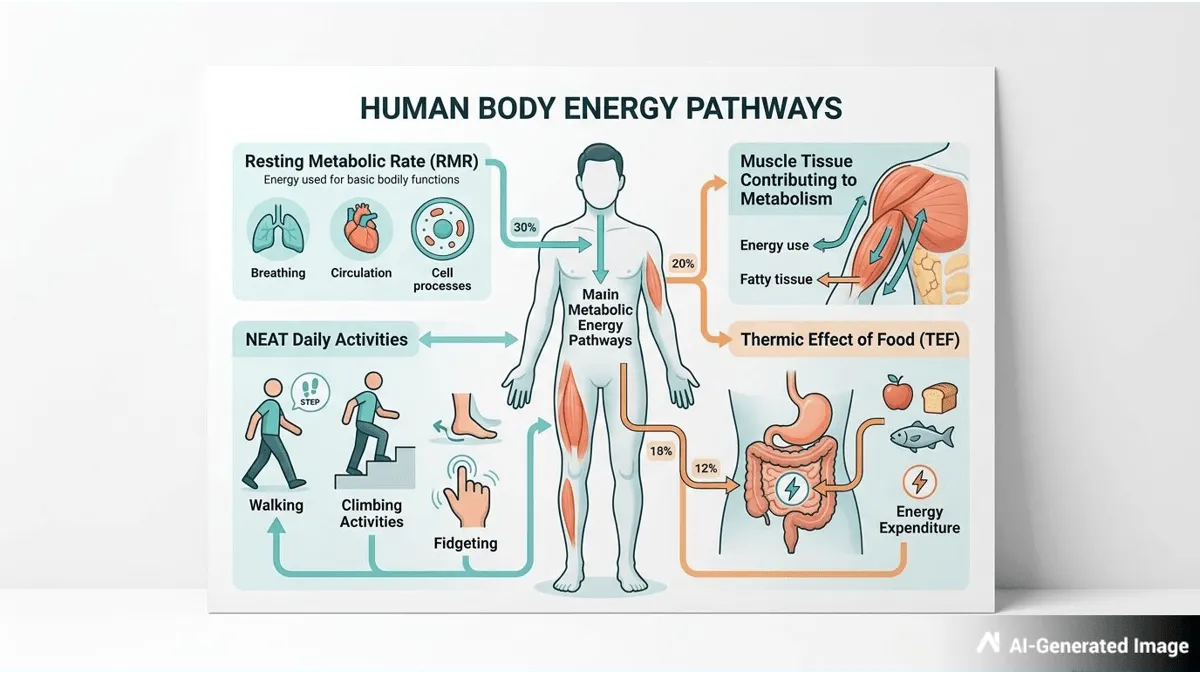
Weight loss is often simplified to “eat less and move more,” but the real science behind fat reduction is more complex. At the center of it all is metabolism—the body’s system for converting food into energy and deciding how that energy is used, stored, or burned.
Understanding how metabolism works can help explain why weight loss varies from person to person and why some strategies are more effective than others.
What Is Metabolism?
Metabolism refers to all the chemical processes in the body that keep you alive and functioning. These processes determine how calories are:
- Burned for energy
- Stored as fat
- Used for muscle repair and growth
- Allocated for basic bodily functions like breathing and circulation
Your total daily energy expenditure (TDEE) is made up of three main components:
- Basal Metabolic Rate (BMR) – energy used at rest
- Physical activity – movement, exercise, walking
- Thermic effect of food – energy used to digest food
Even when you are completely at rest, your body continues burning calories just to sustain life.
The Energy Balance Equation
Weight loss fundamentally depends on one principle: energy balance.
When energy intake is lower than energy expenditure, the body taps into stored fat for fuel.
Energy Balance=Calories In−Calories Out
- If the result is negative → fat loss occurs
- If the result is positive → weight gain occurs
- If balanced → weight remains stable
However, the way the body adjusts to this balance is influenced by hormones, activity level, and genetics.
Why Metabolism Differs Between People
Two people eating the same diet can experience different weight outcomes due to variations in metabolism. Key factors include:
1. Muscle Mass
Muscle tissue burns more calories at rest than fat tissue. More muscle = higher resting metabolism.
2. Age
Metabolism tends to slow with age due to loss of muscle and hormonal changes.
3. Genetics
Some individuals naturally have faster or more efficient metabolic rates.
4. Hormones
Hormones like thyroid hormones, insulin, and cortisol directly affect how energy is processed and stored.
Can You “Boost” Your Metabolism?
While viral claims promise dramatic metabolism boosts, the reality is more grounded:
What actually helps:
- Strength training (builds muscle mass)
- Regular physical activity
- Adequate protein intake (higher thermic effect)
- Good sleep and stress control
What has minimal impact:
- “Fat-burning” supplements
- Extreme detox diets
- Very small frequent meals (effect is often overstated)
The most reliable way to increase calorie burn is to increase lean muscle and daily movement.
Fat Loss vs. Weight Loss
It’s important to distinguish between the two:
- Weight loss = reduction in total body mass (fat + water + muscle)
- Fat loss = targeted reduction in stored fat while preserving muscle
Healthy fat loss strategies focus on maintaining muscle through strength training and adequate nutrition.
Adaptive Metabolism: Why Diets Slow Down Progress
When calorie intake drops too low for too long, the body can adapt by reducing energy expenditure. This is known as metabolic adaptation.
Effects include:
- Slower fat loss over time
- Increased hunger signals
- Reduced daily energy levels
This is why extreme crash diets often fail in the long term.
Sustainable Fat Loss Strategy
A realistic approach to fat loss includes:
- Moderate calorie deficit
- High-protein diet
- Strength training 3–5 times per week
- Daily movement (walking, active lifestyle)
- Proper sleep and recovery
Consistency matters more than intensity.
Conclusion
Metabolism is not a fixed “speed,” but a dynamic system that responds to lifestyle, nutrition, and activity. Weight loss happens when energy balance consistently favors calorie expenditure, but sustainable fat loss depends on preserving muscle, supporting hormones, and avoiding extreme restriction.
Understanding metabolism helps shift focus away from quick fixes and toward long-term, science-based habits that actually work.