

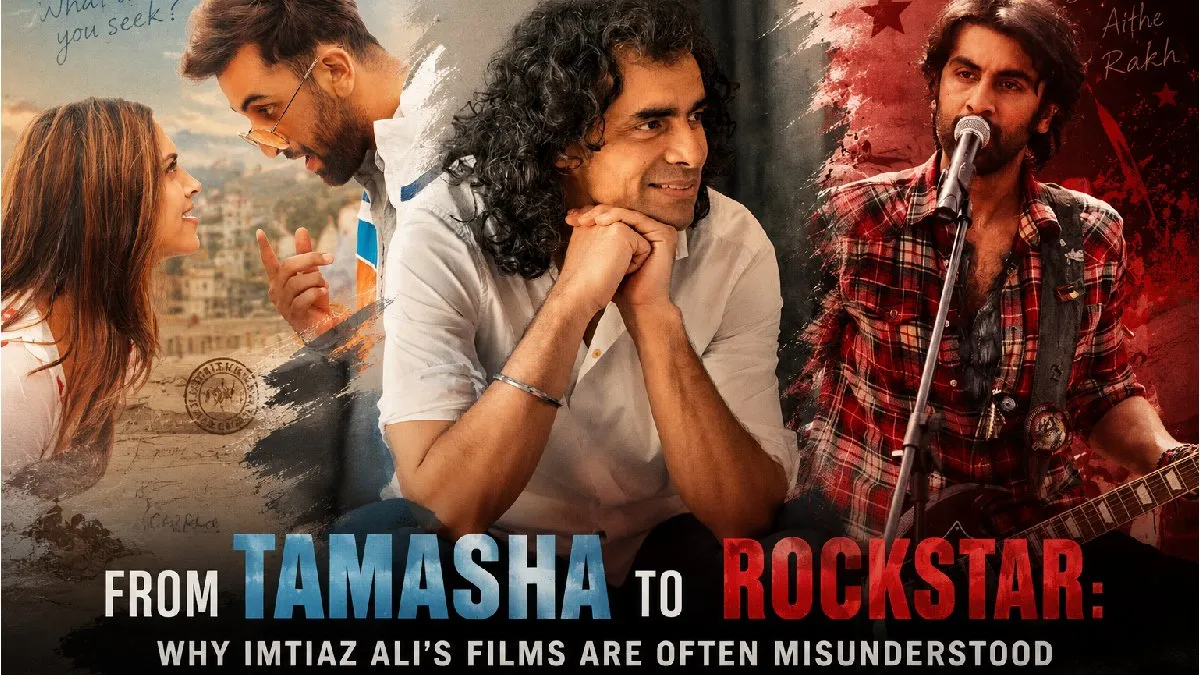
In an era where instant reactions and opening weekend box-office numbers often define a film’s success, filmmaker Imtiaz Ali has consistently challenged audiences with stories that reveal their true depth only over time. From Rockstar (2011) to Tamasha (2015), many of his most celebrated films were initially met with mixed reactions, only to later achieve cult status among movie lovers.
What makes Imtiaz Ali’s cinema so frequently misunderstood on release? The answer lies in his unique storytelling style, emotionally layered characters, and themes that often resonate more deeply as audiences grow older and revisit his work.
Ahead of Their Time
Unlike conventional Bollywood films that offer clear resolutions and straightforward narratives, Imtiaz Ali’s stories often explore complex emotional landscapes. His protagonists are rarely heroes in the traditional sense; they are flawed, conflicted individuals searching for identity, purpose, and freedom.
When Rockstar released in 2011, many viewers expected a typical musical romance. Instead, they received a heartbreaking exploration of pain, artistic obsession, and self-destruction. While the film’s music became an instant sensation, its narrative was initially divisive. Years later, however, audiences began appreciating the emotional complexity of Jordan’s journey, transforming the film into one of Bollywood’s most beloved cult classics.
A similar fate awaited Tamasha. Released in 2015, the film struggled at the box office and received mixed reviews. Many viewers found its narrative unconventional and difficult to connect with. Yet over the years, Tamasha has become a cultural phenomenon, particularly among millennials and Gen Z audiences who identify with its themes of societal pressure, identity crises, and the pursuit of authentic happiness.
The Search for Identity
One recurring theme across Imtiaz Ali’s filmography is self-discovery. Whether it’s Jordan in Rockstar, Ved in Tamasha, Aditya in Jab We Met, or Heer and Veera in Highway, his characters are often engaged in a journey toward understanding themselves.
This focus on inner conflict differs from mainstream storytelling, where external events typically drive the plot. Imtiaz’s films prioritize emotional transformation over dramatic action, making them more rewarding upon repeated viewings.
As audiences mature and encounter similar struggles in their own lives, the emotional truths within these films become increasingly relatable. A college student may not fully connect with Ved’s existential crisis in Tamasha, but years later, while navigating career pressures and personal expectations, the film can suddenly feel profoundly relevant.
The Power of Rewatchability
Many films reveal everything during the first viewing. Imtiaz Ali’s films do the opposite. They often gain meaning with each revisit.
Subtle dialogues, symbolic imagery, recurring motifs, and emotional nuances become more apparent over time. Scenes that initially seem slow or confusing often reveal deeper significance upon reflection.
This rewatchability has played a crucial role in transforming films like Rockstar and Tamasha into cult favourites. Social media discussions, YouTube essays, and fan interpretations have further contributed to their growing popularity, introducing newer audiences to these films years after their theatrical release.
Music as Emotional Storytelling
Another reason Imtiaz Ali’s films age exceptionally well is their music. Collaborations with composers like A.R. Rahman and Pritam have resulted in soundtracks that are deeply integrated into the narrative rather than serving as mere entertainment.
Songs such as “Kun Faya Kun,” “Nadaan Parindey,” “Agar Tum Saath Ho,” and “Safarnama” continue to resonate because they express emotions that words alone cannot capture. As listeners revisit these songs at different stages of life, the films themselves often acquire new meaning.
A Director Who Trusts His Audience
Imtiaz Ali rarely provides easy answers. He leaves room for interpretation, encouraging viewers to engage emotionally rather than passively consume a story.
This creative approach may limit immediate mass appeal, but it often results in films that endure. While many blockbuster hits fade from public memory within a few years, Imtiaz’s films continue to inspire conversations long after their release.
The Legacy of Cult Cinema
The journeys of Rockstar and Tamasha demonstrate that a film’s true impact cannot always be measured by its opening weekend collection. Sometimes, the most meaningful stories require time to find their audience.
As Bollywood continues to evolve, Imtiaz Ali remains one of the industry’s most distinctive voices—a filmmaker whose work often speaks louder with age. His films may not always receive universal acclaim on day one, but their growing influence proves that authentic storytelling has a lasting shelf life.
Perhaps that’s the greatest compliment any filmmaker can receive: creating stories that people understand not immediately, but when they are ready for them.
From Tamasha and Rockstar to Highway and Laila Majnu, here’s why Imtiaz Ali’s films often receive mixed reactions upon release but go on to become cult favourites through their deep exploration of identity, loneliness, trauma, and emotional growth.From Tamasha and Rockstar to Highway and Laila Majnu, here’s why Imtiaz Ali’s films often receive mixed reactions upon release but go on to become cult favourites through their deep exploration of identity, loneliness, trauma, and emotional growth.